
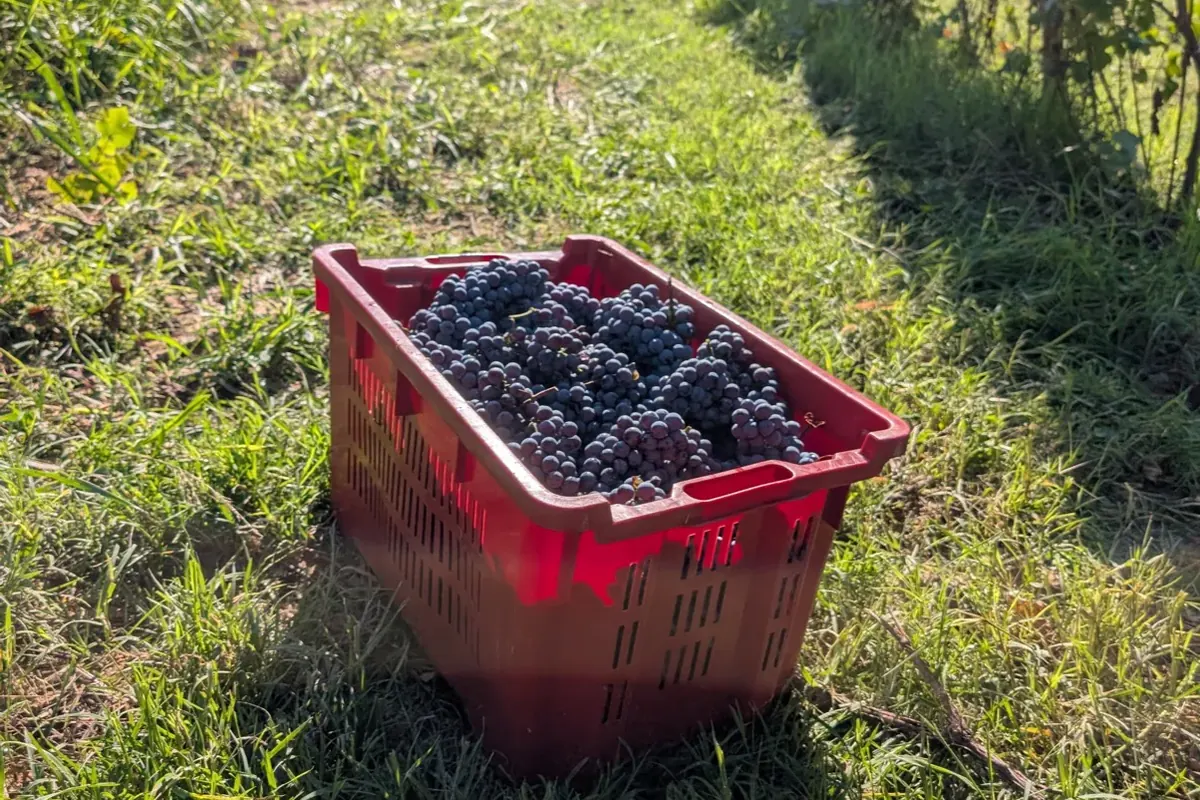
Natural wine is how wine was made before the chemical industry moved into the vineyard and the cellar. Grapes grown without synthetic pesticides, spontaneous fermentation with the yeasts on the fruit, nothing added. The result is a wine that tells you where it came from and what year it was, two things a conventional wine rarely manages.
We started with a simple question: how do you make a good wine without cheating? Work carefully in the vineyard, harvest by hand when the grapes are ready, then step back. ICEA certified organic farming, spontaneous fermentation with the indigenous yeasts of our Monferrato hills, sulphites kept to a minimum. Giglio Rosa, Millecolli and Madonna dei Monti are all Barbera: one grape variety, three ways of listening to it. Since 2024 there is also Névola, a Nebbiolo rosé.
This guide covers everything worth knowing about natural wine: what it actually means, how it differs from organic and biodynamic, how spontaneous fermentation works, what sulphites are, and how to store and serve a natural wine properly. Five articles, one for each question we get asked most often.
What is natural wine
There is still no official definition. But the principle is clear: grapes grown without synthetic chemistry, spontaneous fermentation, no additives in the cellar. What distinguishes a natural wine from a conventional one, which practices are accepted and which are not, and why organic certification on its own is not enough.
Read the article →Natural, organic, and biodynamic wine: what is the difference
Three terms you often hear together, but which mean different things. Organic is a certification with precise rules on pesticides and additives. Biodynamic adds a lunar calendar and Demeter preparations. Natural is an intention: no intervention, in the vineyard or the cellar. Can a wine be all three at once? Yes. Here is how.
Read the article →Spontaneous fermentation: how it works
When you add selected yeasts, fermentation is fast and predictable. When you let the yeasts on the grapes do the work, it takes more time and more attention. The result is a wine with complexity that commercial yeasts cannot replicate. The biology of it, the real risks, and how we manage them in our cellar.
Read the article →Sulphites in wine: what they are and why we use very few
Sulphites are not the enemy. They are a natural preservative used in winemaking for centuries, and every wine already produces some during fermentation. The issue is quantity: conventional wines can reach 200 mg/l. We stay well below that. What sulphites are, what they do to wine and to health, and how we use them.
Read the article →How to store and serve natural wine
A natural wine is more alive than a stabilised one. That means it responds more to its environment. Temperature, light, bottle position: all of it matters more. At the table, serving temperature and glassware make a real difference. A practical guide, no sommelier cellar required.
Read the article →Frequently asked questions
What is natural wine?
Natural wine is made from grapes grown without synthetic pesticides, hand-harvested, and vinified without adding selected yeasts, enzymes, or corrective additives. Fermentation happens spontaneously using the yeasts naturally present on the grapes and in the winery. There is no single legal definition yet, but the core principle is: as few interventions as possible, both in the vineyard and in the cellar.
What is the difference between natural, organic, and biodynamic wine?
Organic wine has an official certification (such as ICEA) with specific rules on pesticides and additives. Biodynamic wine follows the Demeter method, which adds a lunar calendar and specific preparations. Natural wine has no standardised certification: it is an approach that aims for zero intervention in the cellar. You can be organically certified and still make natural wine. That is exactly what we do at Tenuta Magrini.
Does natural wine contain sulphites?
Sulphites are produced naturally during fermentation, every wine contains at least a small amount. Natural wine producers tend to add very few or none at all. At Tenuta Magrini we use minimal quantities, only where necessary to protect the wine. Conventional wines can reach 200 mg/l; ours remain well below the threshold set for certified organic wines.
How should natural wine be stored?
It should be stored away from light and in a cool place: 12–15 °C (54–59 °F) for reds, 10–13 °C (50–55 °F) for rosés and whites. The bottle should lie on its side if it has a cork. Being less stabilised than a conventional wine, it is more sensitive to temperature fluctuations and light. Once opened, drink it within a day or two, or keep it in the fridge with a vacuum stopper.
What is spontaneous fermentation?
Spontaneous fermentation happens when grape must ferments through the action of yeasts already present on the grapes and in the air of the winery, without any added selected yeasts. It is slower and less predictable than inoculated fermentation, but it produces a wine with unique characteristics tied to the specific place and vintage. At Tenuta Magrini all our wines ferment spontaneously.
Our wines
Our labels, all spontaneously fermented. Made the natural wine way: minimal intervention, maximum respect for the grape.