
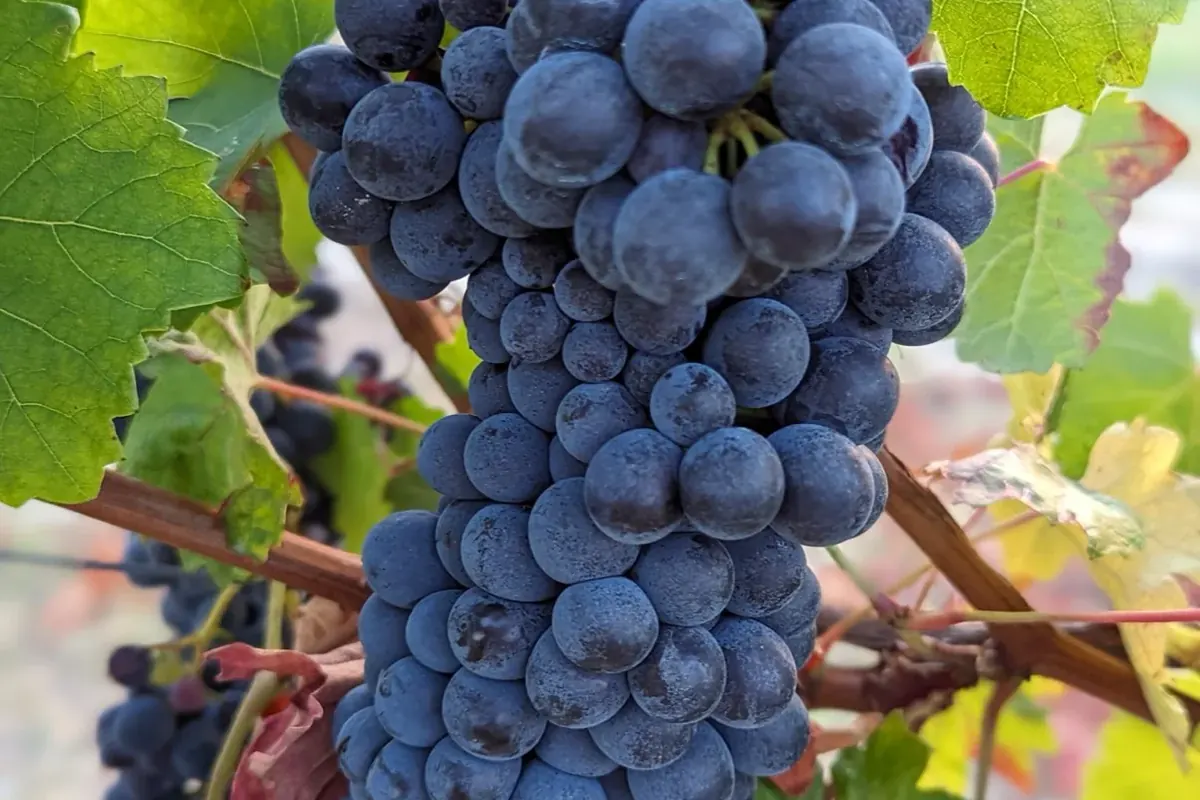
A definition that doesn't exist: and why it still matters
Natural wine has no mandatory specification. No European law defines it, and no single body certifies it with a globally recognised mark. Yet it has become one of the most-used terms in wine over the past decade.
The lack of regulation is a real problem: anyone can print "natural" on a label without meeting any standard. But the substance of the concept remains valid, and those who know the field recognise it.
The most widely shared definition among producers and associations, such as France's AVN (Association des Vins Naturels), is this: wine made from organic or biodynamic grapes, without added selected yeasts, without significant chemical correction, with sulphites reduced to a minimum or absent.
A brief history
"Natural" wine is not a recent invention. Before the post-war industrialisation of agriculture, all fermentations were spontaneous: there were no commercial selected yeasts, and the cellar was a place of waiting rather than control.
The turning point came in the 1950s and 60s, when the chemical industry entered both vineyard and cellar. Synthetic pesticides, nitrogen fertilisers, dried selected yeasts, enzymes, powdered tannins, acidity correctors, tools that made production more predictable but moved wine further from its terroir.
The reaction began in France, in Beaujolais, around the 1970s. Jules Chauvet, a chemist and wine taster, began documenting that sulphur-free fermentations produced wines of greater complexity and more precise varietal expression. His followers, including Marcel Lapierre and Jean Foillard, built what would become the natural wine movement.
In Italy the spread was slower, but from 2000 onwards the number of producers identifying with this approach grew steadily, Piedmont included.
The key principles
Three principles set natural wine apart:
- Minimal intervention in the vineyard. No herbicides, no synthetic pesticides. Ideally certified organic or biodynamic farming. The soil must be alive.
- Indigenous yeasts. Fermentation starts from the yeasts naturally present on the grape skins and in the cellar air, without inoculation of selected strains. This is the most distinctive point of natural wine, the one that sets it apart even from conventional organic wine.
- No or very few additives. The strictest protocol allows zero added sulphites. The more common approach allows low doses of SO₂, generally below 30–40 mg/l total, at bottling. No enzymes, no dried yeasts, no acidifiers or correctors.
How it differs from conventional wine
In a conventional wine, the producer has around sixty additives and technological processing aids permitted under European regulations. Selected yeasts chosen to achieve specific aromatic profiles, enzymes to extract more colour, bentonite to clarify, acidity correctors, sulphites in significant quantities.
This does not mean these tools produce inferior wine. They produce more stable, more predictable, more consistent wine across vintages. That is a legitimate technical choice. But it erases much of the information the wine could transmit: the soil, the climate of that year, the way that specific vineyard experienced that season.
Natural wine gives up predictability in exchange for specificity. Each bottle says something unrepeatable.
Why Tenuta Magrini chose this path
Not for ideology. For consistency with the place.
We are at 350 metres on the south-facing slope of a hill in Monferrato Astigiano, in Grazzano Badoglio. The temperature swings are wide, nights stay cool even in August, the wind is constant. These conditions produce grapes with naturally high acidity and aromas that need no construction in the cellar.
When you have grapes like these, cellar intervention is already a concession. Adding selected yeasts means choosing what flavour you want, rather than listening to what flavour is already there. We chose to listen.
Since 2021 we have used no herbicides. Since 2023 we have held ICEA organic certification. Fermentations have been spontaneous from day one. Total sulphites in Millecolli and Giglio Rosa stay below 30 mg/l. Madonna dei Monti, due to its time in barrique, receives a minimal dose of SO₂ at bottling.
We do not call our wines "natural" as a marketing label. We do so because it is the most accurate description of what happens in the vineyard and in the cellar.
Keep reading: Natural, organic, biodynamic: what's the difference, or learn about how spontaneous fermentation works in our cellar.
To hear all this in a glass, start with Millecolli.