
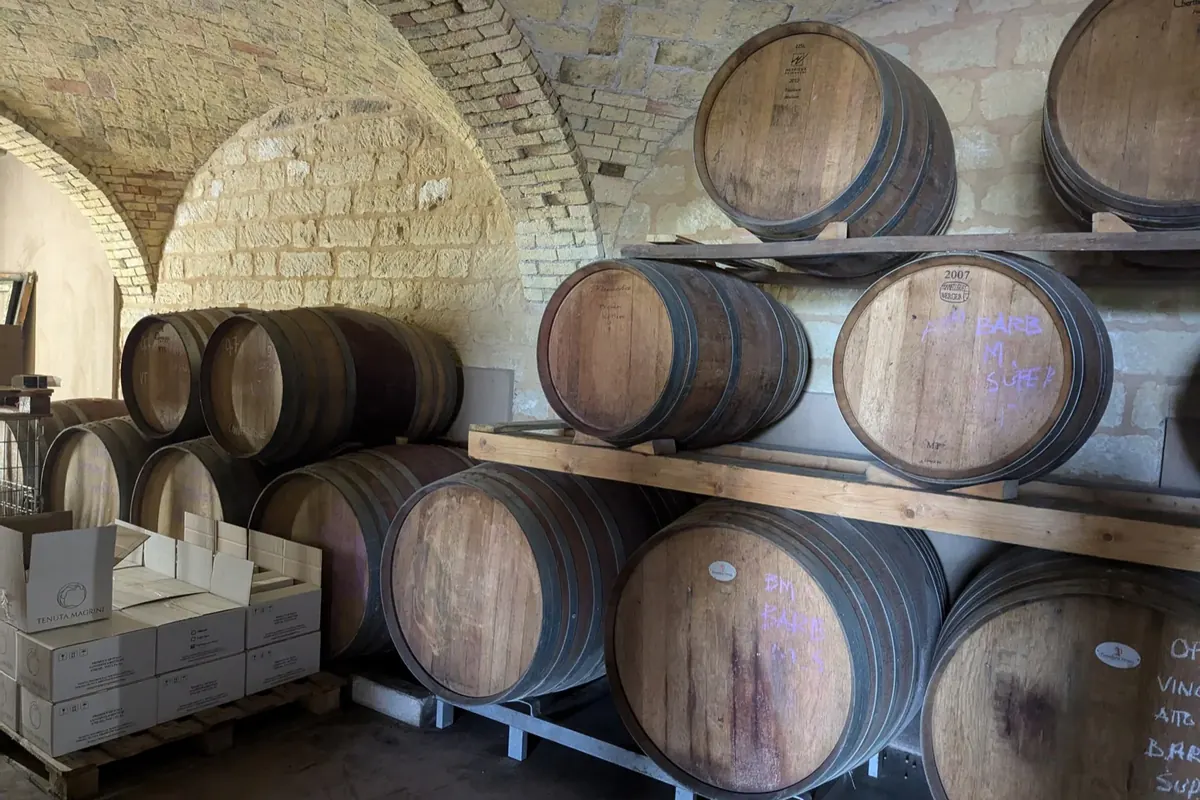
What spontaneous fermentation is
Alcoholic fermentation is the conversion of grape must sugars into alcohol and carbon dioxide, carried out by yeasts. In a conventional or standard organic wine, this process is started by adding selected dried yeasts, laboratory-produced from specific strains chosen for speed, predictability or aromatic profile.
In spontaneous fermentation, nothing is added. The yeasts that start and complete the fermentation are those already present: on the grape skins, on the cellar walls, in the air of the place. These are indigenous yeasts, also called native or ambient yeasts.
The result is a slower, less linear fermentation with a microbial population that shifts as the process unfolds. In the early stages, non-Saccharomyces species dominate (Hanseniaspora, Metschnikowia, Lachancea). As the alcohol level rises, these give way to Saccharomyces cerevisiae, the same yeast used in conventional fermentation, but here present naturally.
Indigenous vs selected yeasts
Selected yeasts have been developed and refined over decades to give the producer control: guaranteed start, rapid and complete fermentation, microbiological stability, reproducible aromatic profiles (fruity, floral, spicy, depending on the strain).
The advantage is real. If you need fermentation to start within 24 hours under any climatic condition, selected yeasts give you that certainty. The problem is that this control has a cost: the wine tends to resemble itself regardless of vintage, vineyard or soil.
Indigenous yeasts offer no such guarantees. Fermentation may not start for two or three days. It can be slow. It can stall halfway if temperatures drop too far. But it brings something into the wine that selected yeasts cannot: the specificity of that place, that season, that cellar.
Two wines from the same variety made with the same selected yeasts in two different zones will resemble each other. Two wines from the same variety made with indigenous yeasts in two different zones will be different. That is the fundamental distinction.
The real risks
Anyone who says spontaneous fermentation carries no risk has never done it.
The three main risks are:
- Stuck fermentation. Fermentation stops before the sugars are exhausted. The wine remains sweet and is microbiologically unstable. Without intervention, it can deteriorate.
- Acetic acid production. Certain non-Saccharomyces species and acetic acid bacteria, under stress conditions (oxygen, high temperatures, damaged grapes), produce excessive acetic acid. The wine smells of vinegar, and there is no recovery from that.
- Brettanomyces. Brett is a contaminant yeast that produces animal, barnyard and leather notes. In small quantities it is tolerated or even appreciated by some. At high levels it makes the wine undrinkable.
These risks are managed, not eliminated. The way is prevention: healthy grapes, a clean cellar, controlled temperatures, daily attention during fermentation.
The possible rewards
When spontaneous fermentation goes well (and it does, often, with healthy grapes and an attentive cellar) it produces something selected yeasts cannot replicate.
Aromatic complexity. Not the precise profile of a chosen strain, but a layering of notes that builds progressively: fruit, minerality, and something hard to name and easy to recognise.
Structure. Indigenous yeasts, fermenting more slowly, extract differently. The wine often has more interesting texture and a different length on the finish.
Identity. The wine resembles the place it comes from. Year after year, with your own house yeasts, you build something unrepeatable elsewhere.
How we manage it at Tenuta Magrini
The first step is in the vineyard. No synthetic pesticides since 2021, ICEA certified organic since 2023: the grapes that enter the cellar carry an active, healthy microbial flora. A grape treated with synthetic fungicides has a decimated population of indigenous yeasts, spontaneous fermentation in that case is already compromised before it starts.
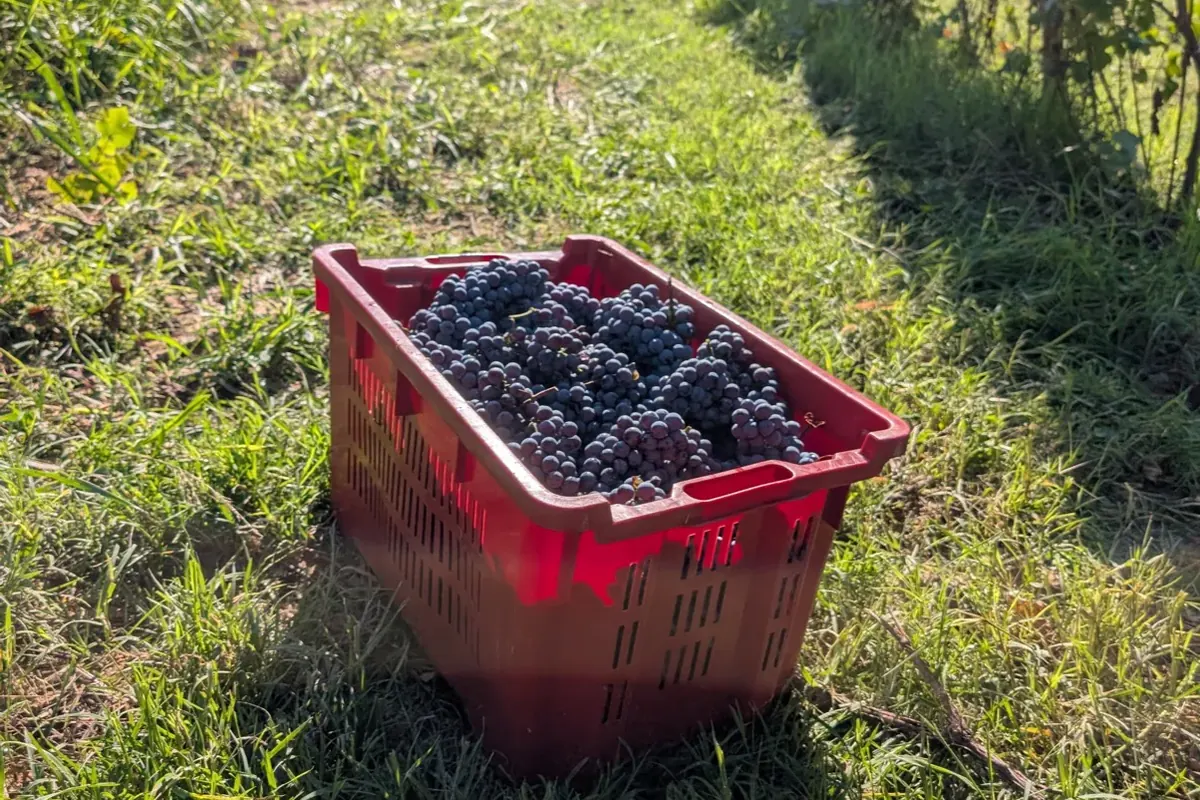
Hand harvest, in small crates. Not for aesthetic reasons, but because intact grapes have different osmotic pressure: the yeasts on the skins remain viable, the juice does not oxidise, fermentation can start in optimal conditions.
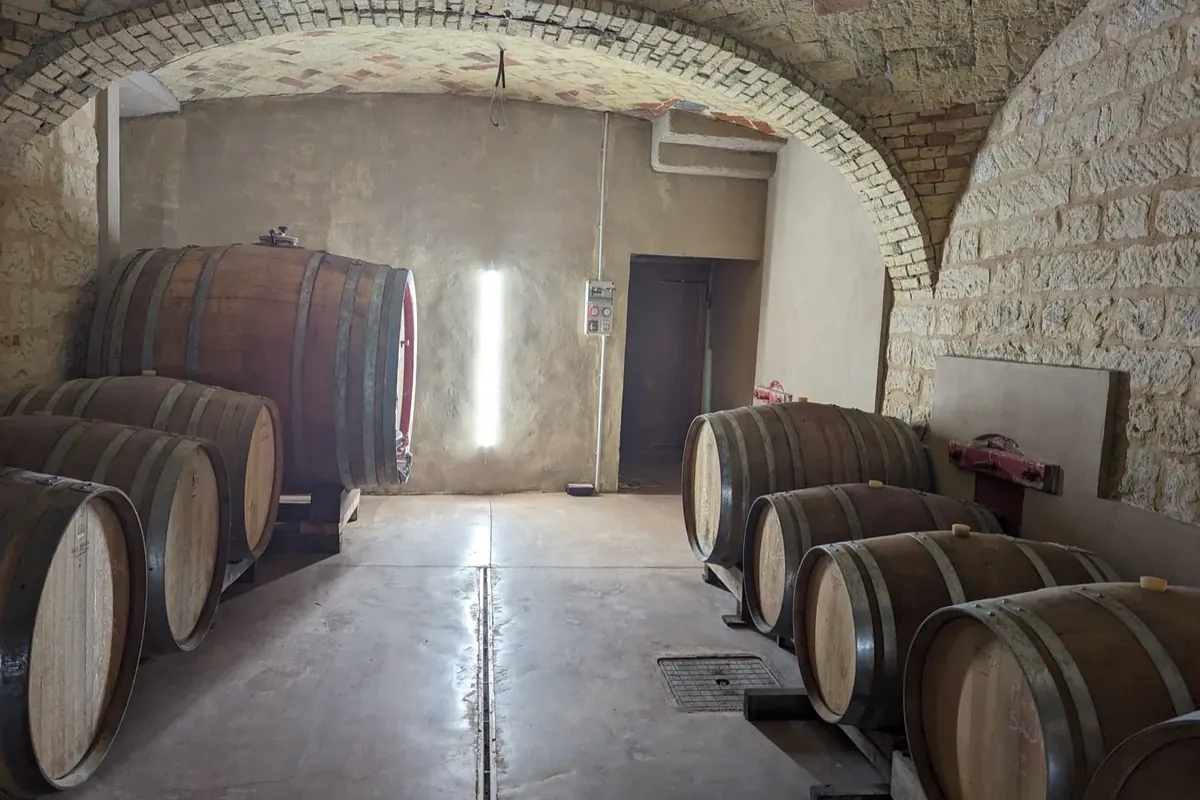
In the cellar: temperature is controlled for the first 48–72 hours to avoid too abrupt a start. Then we let it run. We check density and temperature every day. If fermentation slows too much, we adjust temperature. If parameters stay within range, we do not touch anything.
Millecolli and Giglio Rosa ferment in stainless steel at controlled temperature. Madonna dei Monti starts in steel and completes its ageing in barrique. In no case do we inoculate selected yeasts.
It is not always easy. Some vintages the fermentation is slow and requires patience. But every time we open a bottle and recognise something precise (the freshness of a September night, the acidity of the marly soil) we know it was worth it.
To understand why spontaneous fermentation is central to natural wine, read what natural wine is. To see how the organic and natural approaches differ, see natural, organic and biodynamic.
Millecolli is the most direct way to understand what spontaneous fermentation produces in a hillside Barbera d'Asti.