
The confusion problem
On a restaurant list, a wine shop shelf, a technical data sheet: "organic", "biodynamic" and "natural" are frequently interchanged without distinction. Sometimes it is laziness. Sometimes it is deliberate.
Knowing the difference is how you work out what is, and is not, in the bottle you are buying.
Organic wine: clear rules, legal backing
Organic wine is the only one of the three with a solid legal basis in Europe. EU Regulation 203/2012 covers both grape growing and winemaking, and requires certification from an accredited third-party body.
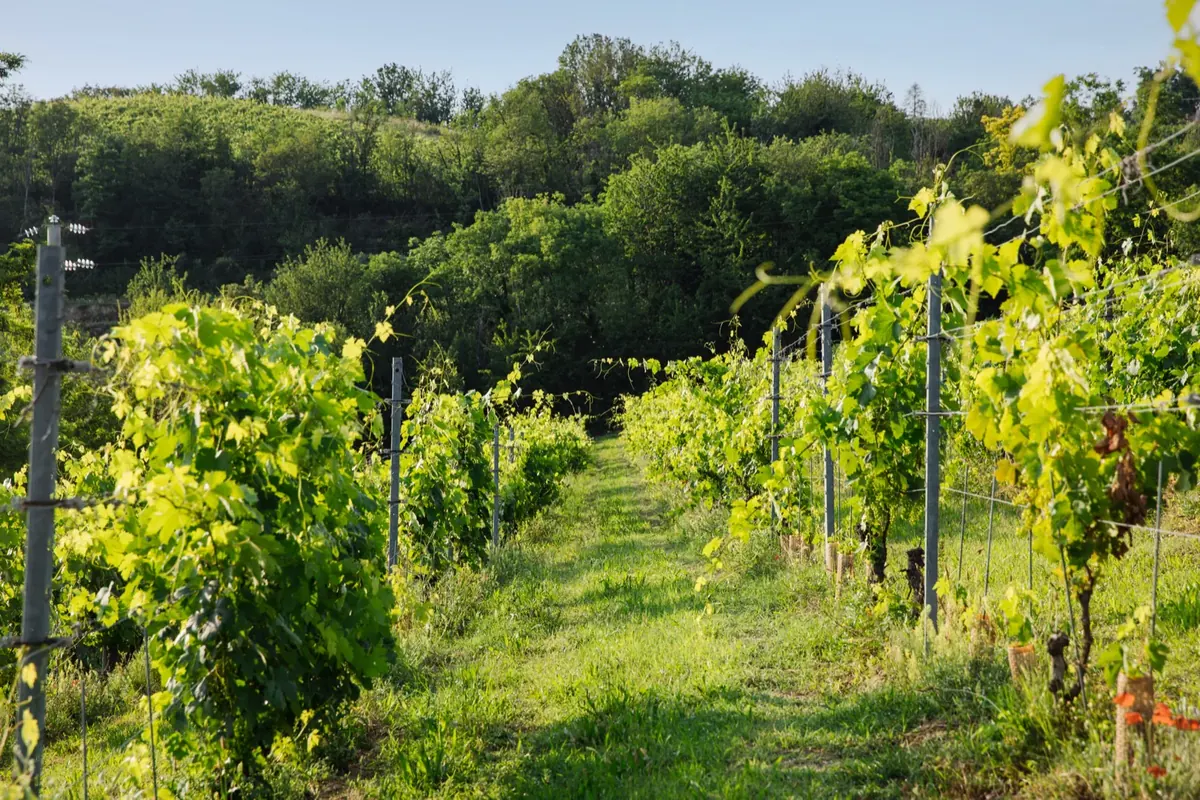
In the vineyard: no synthetic pesticides, no chemical fertilisers, no GMOs. Copper and sulphur treatments are permitted within set limits, along with microbiological preparations and mechanical soil tillage.
In the cellar: selected yeasts are permitted (preferably from organically grown grapes), as are enzymes, oenological tannins and sulphites, but at reduced maximums compared to conventional wine. Organic wine is not necessarily spontaneously fermented.
The most common certifying bodies in Italy are ICEA, Suolo e Salute and CCPB. Tenuta Magrini has held ICEA certification since 2023.
Biodynamic wine: organic plus Steiner
Biodynamic viticulture incorporates all organic practices and goes beyond them. It draws on the thinking of Rudolf Steiner (early twentieth century) and regards the farm as a closed, self-sustaining organism in which soil, plants, animals and cosmic cycles are interconnected.
In practice this means: specific preparations applied in the vineyard (such as horn manure, or preparation 500, compost fermented in a cow horn), a lunar calendar guiding vineyard and cellar operations, and the exclusion of all synthetic chemical inputs.
The main biodynamic certifications are Demeter (international) and Biodyvin (focused on wine). Both apply stricter criteria than EU organic regulations.
In the cellar, the biodynamic approach is more flexible: some Demeter-certified wineries still use selected yeasts and sulphites at significant levels. The certification primarily concerns vineyard management.
Natural wine: no certification, only the intent
Natural wine has no legal specification and no universally recognised certifying body. Producer associations exist (AVN in France, VinNatur in Italy, RAW Wine internationally) which define their own membership criteria, but these carry no legal force.
The core of the concept: grapes from organic or biodynamic farming, fermentation with indigenous yeasts only, no significant additives in the cellar, minimal or zero sulphites.
The word "natural" is the most exposed to misuse precisely because no one truly polices it. An informed consumer must look beyond the label: who is the producer, how do they work, what do they say about their cellar.
Side-by-side comparison
| Organic | Biodynamic | Natural | |
|---|---|---|---|
| Legal basis | EU Reg. 203/2012 | No (Demeter is private) | No |
| Certification | ICEA, Suolo e Salute, CCPB, etc. | Demeter, Biodyvin | AVN, VinNatur, RAW (not mandatory) |
| Synthetic pesticides | Prohibited | Prohibited | Prohibited (by principle) |
| Selected yeasts | Permitted | Permitted (varies by cert.) | Prohibited |
| Added sulphites | Permitted (reduced max.) | Permitted (variable max.) | Minimal or zero |
| Biodynamic preparations | No | Required | Optional |
| Cellar additives | Reduced approved list | Reduced approved list | None or minimal |
The approaches are not mutually exclusive
A natural wine is almost always made from organically or biodynamically grown grapes, otherwise the concept of "minimal intervention" in the cellar does not hold, because the wine would already be compromised upstream.
An organic wine is not necessarily natural: it can be fermented with selected yeasts and contain additives permitted under the regulation. It is a healthier wine than the conventional average, but it is not the same thing.
A biodynamic wine can come very close to natural, or not, depending on how the cellar operates. Demeter certification guarantees vineyard management; it says nothing about which yeasts were used.
Where Tenuta Magrini fits
We are ICEA certified organic. That is the official, verifiable fact, with a certification number.
In the cellar we go further: no selected yeasts, total sulphites below 30 mg/l in Millecolli and Giglio Rosa, no enzymes, no correctors. Madonna dei Monti, because of its time in barrique, receives a minimal dose of SO₂ at bottling.
We do not use biodynamic preparations. Not because we consider them wrong, some estates use them to remarkable effect, but because we want to be precise about what we do: certified organic farming with a natural approach in the cellar.
To understand how spontaneous fermentation, the core of our natural approach, works in practice, read the article on spontaneous fermentation. For the basics, start with what natural wine is.