
Organic Farming
Sustainability in the Cellar
Lightweight bottles, sugarcane closures, reduced transport, minimal energy: the concrete choices we make to produce wine more responsibly
Sustainability does not end at harvest. An organically certified wine can arrive in a one-kilogram bottle, sealed with a virgin plastic closure, shipped by lorry for three thousand kilometres. That impact exists, even if the vineyard was perfect. At Tenuta Magrini we have thought carefully about every material and every step that happens after the wine enters the bottle. We are not a carbon-neutral winery and have no intention of claiming to be. But on every line we can influence, we have taken the lighter option.
The lightweight bottle
Glass is the heaviest packaging material a winery uses, and the most energy-intensive to produce. A standard Bordeaux bottle weighs around 500–550 grams. The "heavy" versions used by many wineries to signal quality and solidity exceed 800 grams, sometimes reaching a kilogram. Glass itself is not the problem (it is infinitely recyclable without quality loss), but producing virgin glass requires significant energy, and transporting it adds to the carbon footprint of every shipment.
For our labels we chose lightweight bottles: a weight meaningfully below the sector average. This reduces raw material consumption and lowers the weight per case, with direct effects on transport emissions. It is a choice invisible from the outside of the bottle, but measurable on the scales and felt in every delivery.
Nomacorc Green: the sugarcane closure
On our bottles you will find neither traditional cork nor conventional plastic stoppers. We use Nomacorc Green closures by Vinventions: co-extruded stoppers made primarily from sugarcane, a renewable raw material. Sugarcane is a crop that captures CO₂ as it grows; the bio-based polyethylene derived from it has a significantly lower carbon footprint than petroleum-derived polyethylene.
Nomacorc Green is 100% recyclable through standard plastic recycling streams, unlike cork, which is compostable but not recoverable through ordinary kerbside recycling, and unlike many composite stoppers that combine inseparable materials. Co-extrusion delivers controlled, uniform oxygen transmission from bottle to bottle, eliminating the variability of natural cork and the risk of TCA contamination (the compound responsible for "corked" wine).
For a wine like ours (no heavy fining agents, sulphites kept to a minimum, already alive in the bottle) having a closure that guarantees predictable micro-oxygenation is also a technical advantage. The wine evolves consistently, regardless of which bottle you open.
Reduced transport footprint
We are a small estate in Monferrato, not a wine multinational with warehouses on every continent. Most of our wine is distributed in Italy, primarily in the north, and in a limited number of European markets. This is a commercial choice, but it also reflects a principle of coherence: fewer kilometres travelled means fewer emissions, and selling locally also means faster feedback from the people who open our bottles.
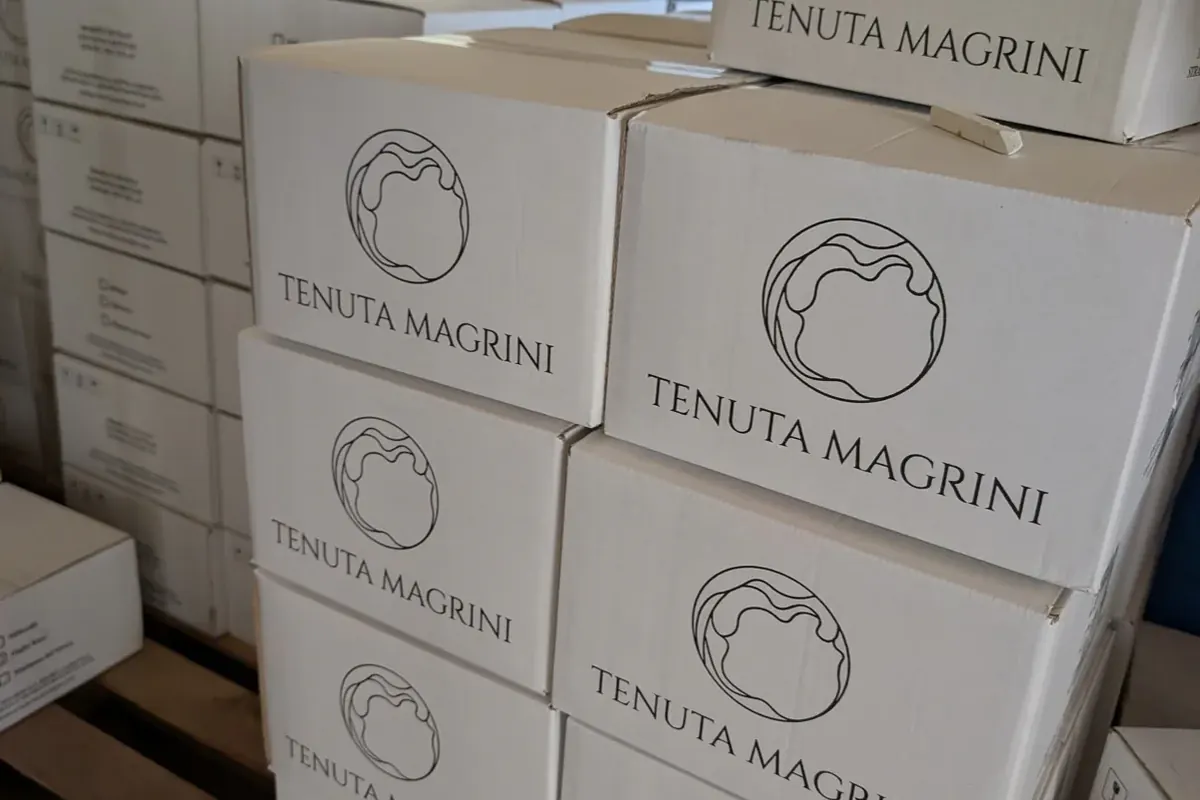
For shipments we use recycled and recyclable cardboard packaging, without expanded plastic filler materials. Deliveries are consolidated where possible to reduce part-load journeys. It is not optimised logistics, we are too small for that: it is day-to-day attention to not creating waste where none is needed.
Energy use in the cellar
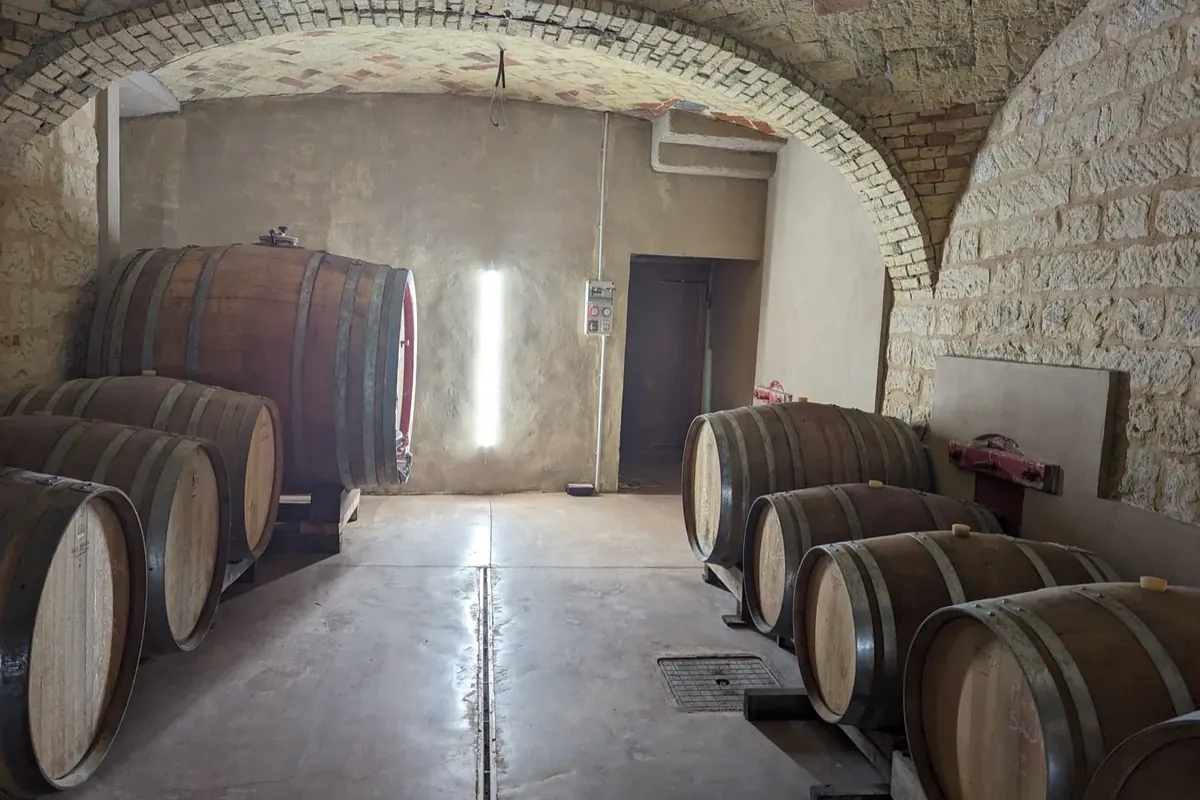
Our cellar is small by design, not only by size. We have no large-scale refrigeration systems to stabilise the wine, no vacuum concentrators, no flash pasteurisation. It is a winemaking choice that is also an energy choice: fewer machines running, less consumption. Spontaneous fermentation at ambient temperature, in modest-sized vessels, requires far less energy than controlled fermentation in industrial tanks.
Cellar cooling during fermentation makes use of the natural temperatures of the autumn season, harvest takes place in September and October, when nights already cool down. This is not climate control: it is using what is already there.
Consistency that starts in the vineyard
Everything described here is consistent with the founding choice: to farm organically in Monferrato, with minimum intervention, respecting the soil and the plant. Our philosophy does not stop at the ICEA certification: it extends to every material decision that concerns the finished product.
We would rather talk about concrete choices (bottle, closure, transport, energy) than generic pledges: every line is measurable and every choice has a reason. If we find better solutions over time, we adopt them.
Our wines
Our labels, all ICEA certified. In lightweight bottles, sealed with Nomacorc Green sugarcane closures.