
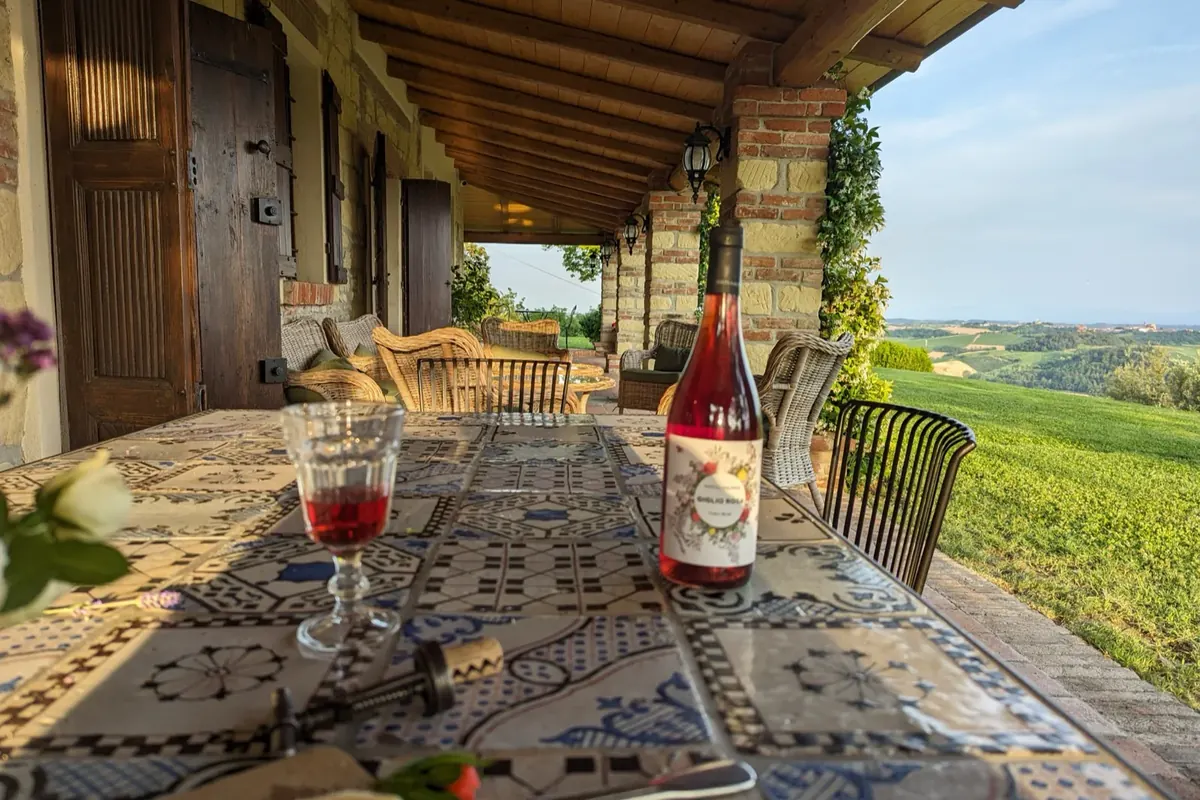
Monferrato doesn't sell itself on postcards. It doesn't have Florence's crowded piazzas or the lake views of the Italian north. What it has is a landscape that changes with every season, villages untouched by mass tourism, restaurants where the food is taken seriously, and one of the highest densities of wine producers in Italy.
We are based in Grazzano Badoglio, a small village in the Asti stretch of Monferrato. Our vines sit on a south-facing slope at 350 metres above sea level. From here, the vineyards are reachable on foot, the most interesting villages by car, and the cities of Asti, Casale Monferrato and Alessandria within half a day's drive.
The best time to visit
Spring and autumn are the two seasons that draw people back year after year. In April and May the hills turn a fresh green, the vineyards come back to life and the air still holds a pleasant coolness. It is ideal for walking between the rows without July's heat, for visiting cellars as they prepare for the growing season, and for finding a table at a local trattoria without booking weeks ahead.
Autumn, from September through November, is perhaps the most spectacular time. The harvest in September brings a sense of collective energy to the countryside: tractors on the ridges, the smell of must in the air, short days that are still warm. In October the hills turn orange and red; in November the white truffle season begins and the air becomes crystalline. Summer works well for those seeking quiet countryside, but the heat can be intense. Winter is beautiful in its own way, low fogs, long silences, occasional snow, but many wineries reduce their visiting hours.
What to do in Monferrato
Wineries and wine
The density of producers in Monferrato surprises first-time visitors. Alongside the major appellations (Barbera d'Asti, Grignolino, Ruché di Castagnole Monferrato) there are dozens of small producers working in an artisanal way, often with little wider visibility. Visiting a winery here doesn't mean pulling up to a resort with a gift shop; it means knocking on a farmhouse door, being welcomed by the family, and walking the vineyard with the person who tended it.
Villages and architecture
Casale Monferrato preserves one of the most intact historic centres in Piedmont, with its eighteenth-century synagogue, arcaded streets and the Castello dei Paleologi. Grazzano Badoglio, the village where our vines grow, is a fine example of a medieval borgo that has remained largely authentic, its parish church of San Giovanni Battista presiding over the main square. Vignale Monferrato, Moncalvo, Treville: every ridge has its bell tower.
Food and trattorias
The cooking of Monferrato is robust and seasonal. Tajarin pasta with ragù, agnolotti del plin, vitello tonnato, bagna cauda in winter. White truffles from the Alba area reach more accessible prices here than in the Langhe itself. Historic village trattorias still serve fixed lunch menus with house wine that is often a local Barbera. Booking ahead is almost always necessary at weekends.
Walks and countryside
Monferrato is crossed by a network of little-travelled hill paths. The Strada del Vino e dei Sapori del Monferrato connects several villages along signed routes that suit most fitness levels. The best seasons for walking are spring and autumn; in summer, the midday heat can make sustained outdoor activity uncomfortable.
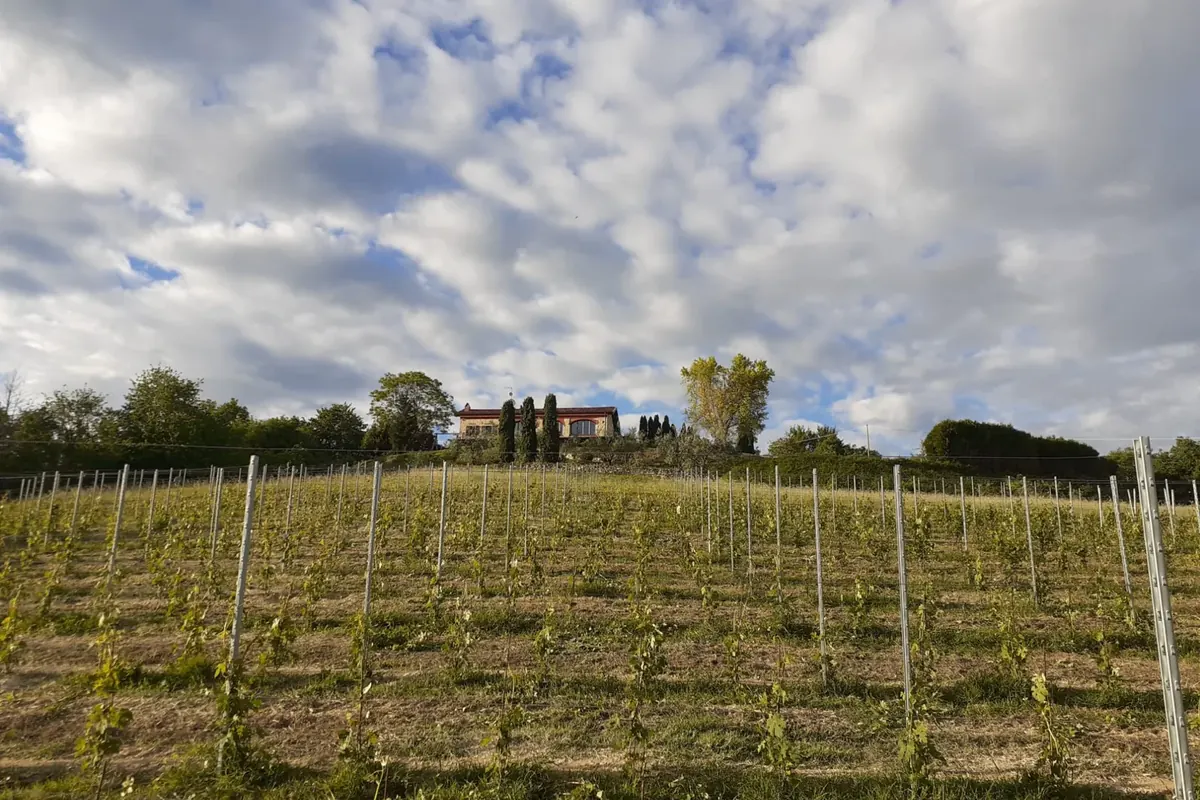
What about Tenuta Magrini?
Visits are not possible here yet: we are still setting up to welcome people, and we would rather open when it is done properly.
We are not a wine shop open to the public. We are a working farm, open all year, and when we do open it will be for those who genuinely want to understand how the wine comes into being, not just taste it: small groups, a walk through the vineyard and the cellar, unhurried.
Nearby attractions
Within an hour of Grazzano Badoglio you will find some of Piedmont's most important food and wine destinations:
- Asti (30 min): the capital of Barbera d'Asti, with its medieval historic centre, noble towers and the regional Nizza enoteca.
- Alba (50 min): the white truffle capital and gateway to the Langhe, with Barolo and Barbaresco reachable in under half an hour.
- Casale Monferrato (25 min): the cultural centre of the Monferrato Casalese, with museums, historic architecture and local produce markets.
- Turin (1h): for those wanting to combine countryside and city, the Piedmontese capital is easily reachable by car or by train from Asti.
Practical tips
- Getting here: Monferrato is not well served by public transport. A car is almost essential for moving between villages. Asti is reachable by train from Turin, Milan and Genoa; car hire is available from the station.
- Where to stay: farm stays and bed & breakfasts in the hill villages suit the place better than hotels in the larger towns. Booking well in advance is essential for October weekends.
- Roads: the hill roads are narrow and winding. They can be slippery in winter. Drive carefully, especially after dark.
- Language: outside the larger centres, Italian is spoken almost exclusively, often with a Piedmontese accent. A basic knowledge of Italian is useful, particularly in countryside restaurants.
Discover Monferrato in our wines
Every bottle from Tenuta Magrini is born from these hills. The clay-marl soil, the wind that dries the bunches, the light on the September mornings: all of this ends up in the glass.