
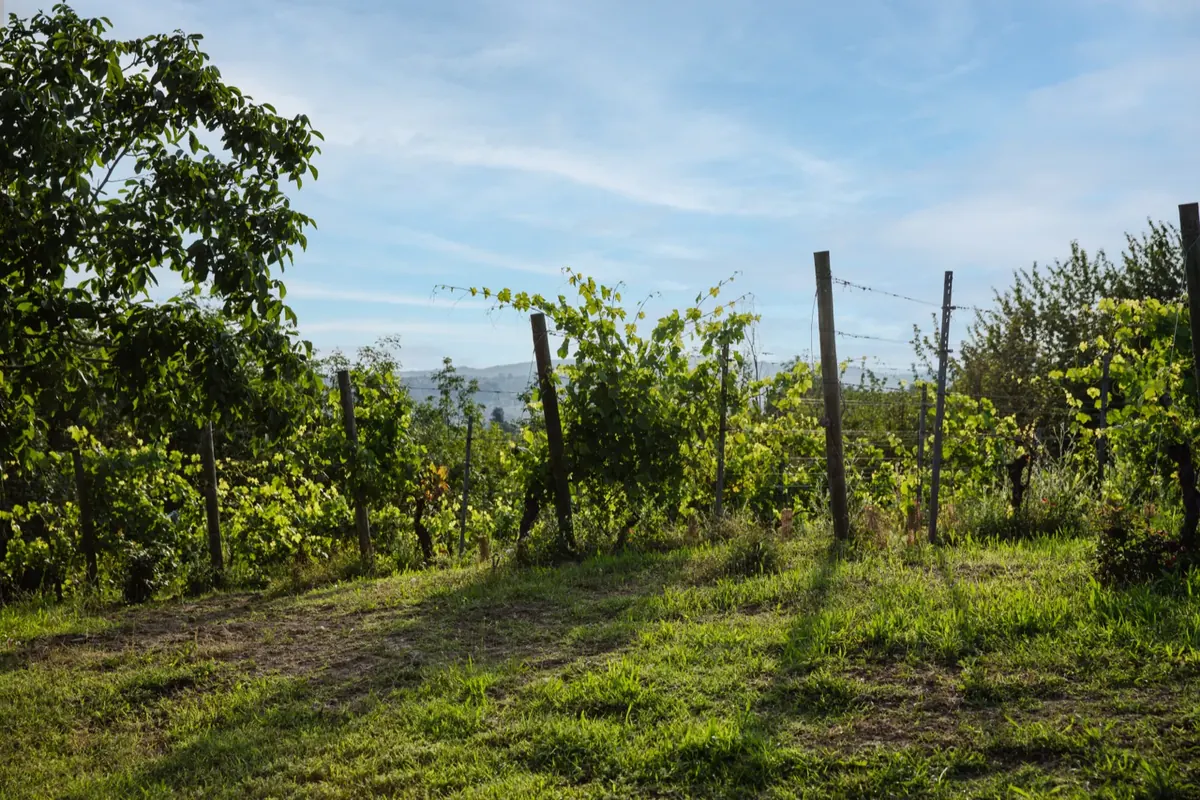
Organic Farming
Organic Viticulture: What It Really Means
The legal definition, what's banned, what's allowed, and the difference between organic grapes and organic wine
The word "organic" on a wine label has a precise legal meaning: it is a certification governed by European law, not a self-declaration. Yet many consumers, even enthusiasts, are not entirely clear on what it entails when it appears on a bottle of wine. The distinctions matter, and they are worth understanding.
The legal basis: EU regulation
In Europe, organic production is governed by EU Regulation 2018/848, which replaced the earlier EC Regulation 834/2007 and came fully into force in 2022. For wine specifically, the pivotal moment was EU Regulation 203/2012, which for the first time regulated not only the cultivation of grapes but also winemaking, what happens in the cellar after harvest. Before that date, only "wine made from organically grown grapes" could be labelled; the wine itself could not legally be called organic.
Today, a producer who wants to write "organic wine" on the label must comply with rules covering both the vineyard and the cellar, submit to annual inspections by an accredited certification body (such as ICEA, in our case), and document every intervention carried out throughout the year.
What is banned in the vineyard
The primary prohibition covers synthetic pesticides: synthetic insecticides, fungicides, herbicides, and chemical weed-killers are not permitted. Also banned are synthetic fertilisers (chemical nitrates, artificial soil improvers), and hormonal growth regulators. In practice, this eliminates most of the inputs that conventional agriculture relies on to simplify field management.
The use of genetically modified organisms (GMOs) is also prohibited, neither as plant material nor as additives in treatments.
What is allowed in the vineyard
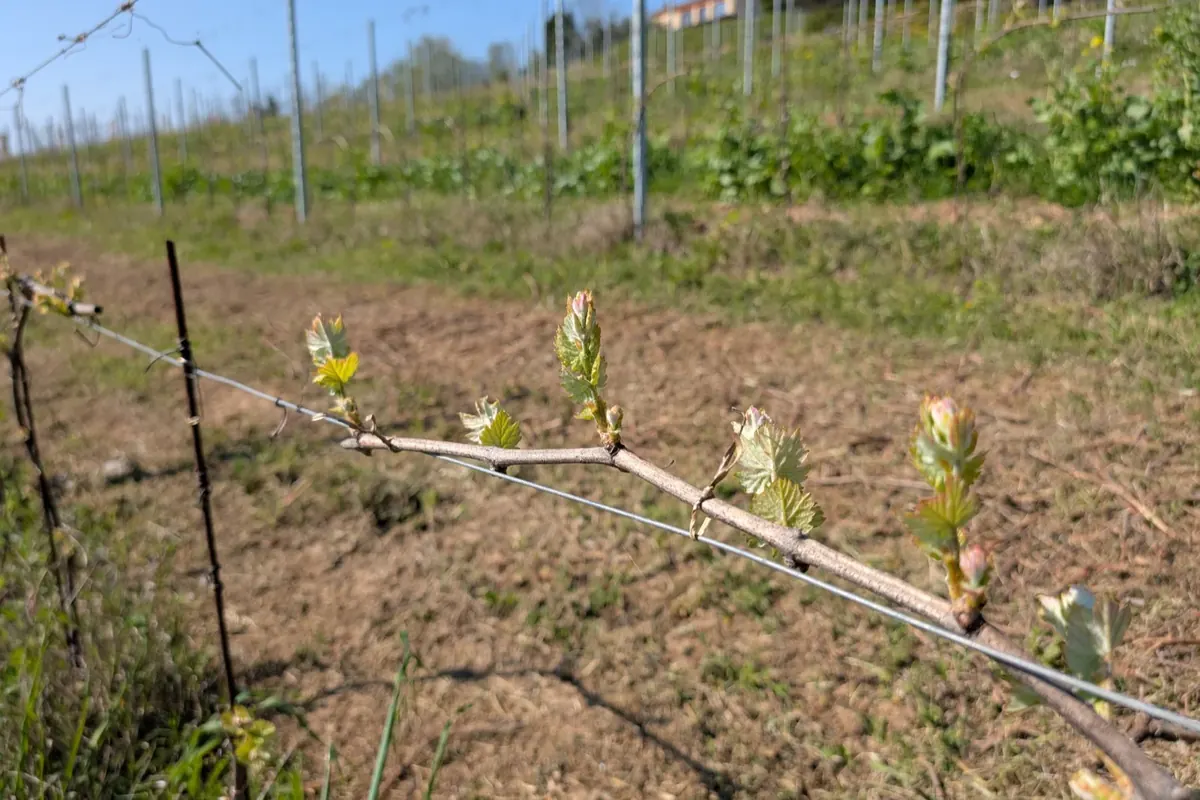
Organic does not mean no treatments: it means using only the substances approved under the regulations. In viticulture, sulphur and copper, the classic "Bordeaux mixture", are permitted to combat powdery mildew and downy mildew. Preparations based on kaolin, natural pyrethrins, essential oils, and other active ingredients of natural origin listed in the European annex are also allowed. For fertilisation, compost, green manure, matured manure, and other organic amendments are used.
Soil management must support microbial life: cover crops between rows, shallow tillage, and no chemical weed control. At Tenuta Magrini we stopped using herbicides in 2021, well before formally beginning the conversion process.
The key distinction: organic grapes vs organic wine
Before 2012, a producer could grow grapes organically but then add non-organic inputs in the cellar: GMO selected yeasts, chemical acidifiers, synthetic fining agents. The resulting wine could only state "wine made from organically grown grapes", not "organic wine". This was an important distinction: it guaranteed the field, not the bottle.
Today the regulation covers the entire chain. Organic wine requires that the cellar too must respect strict limits: maximum sulphite levels lower than those for conventional wine (100 mg/l for reds, versus 150 mg/l), a ban on certain correction and de-acidification practices, and a restricted list of permitted processing aids.
Why the vineyard alone is not enough
A wine can come from impeccably farmed grapes and then be profoundly altered in the cellar: flash pasteurisation, micro-oxygenation, addition of exogenous tannins, vacuum concentrators, aromatic yeasts selected to replicate standardised flavour profiles. None of these interventions is illegal in conventional wine. But they betray what the organic vineyard had built.
This is why we work on both fronts: our philosophy is to reduce interventions in the vineyard and in the cellar alike. The ICEA organic certification guarantees regulatory compliance; our approach in the cellar goes further, seeking to interfere as little as possible with what the grape has to say.
Two levels, two guarantees
Organic in the vineyard means: no synthetic pesticides, no chemical fertilisers, no GMOs, annual third-party audits. Organic on the bottle means all of that plus a restricted list of permitted cellar interventions and a lower ceiling on added sulphites. Two levels of guarantee, both verifiable, both required to call a wine organic in Europe.
To understand how the certification process works in practice, read our article on ICEA and our journey.
Our organic wines
Our labels, all ICEA certified. Grown without synthetic chemistry in Monferrato, made in the cellar with minimum intervention.