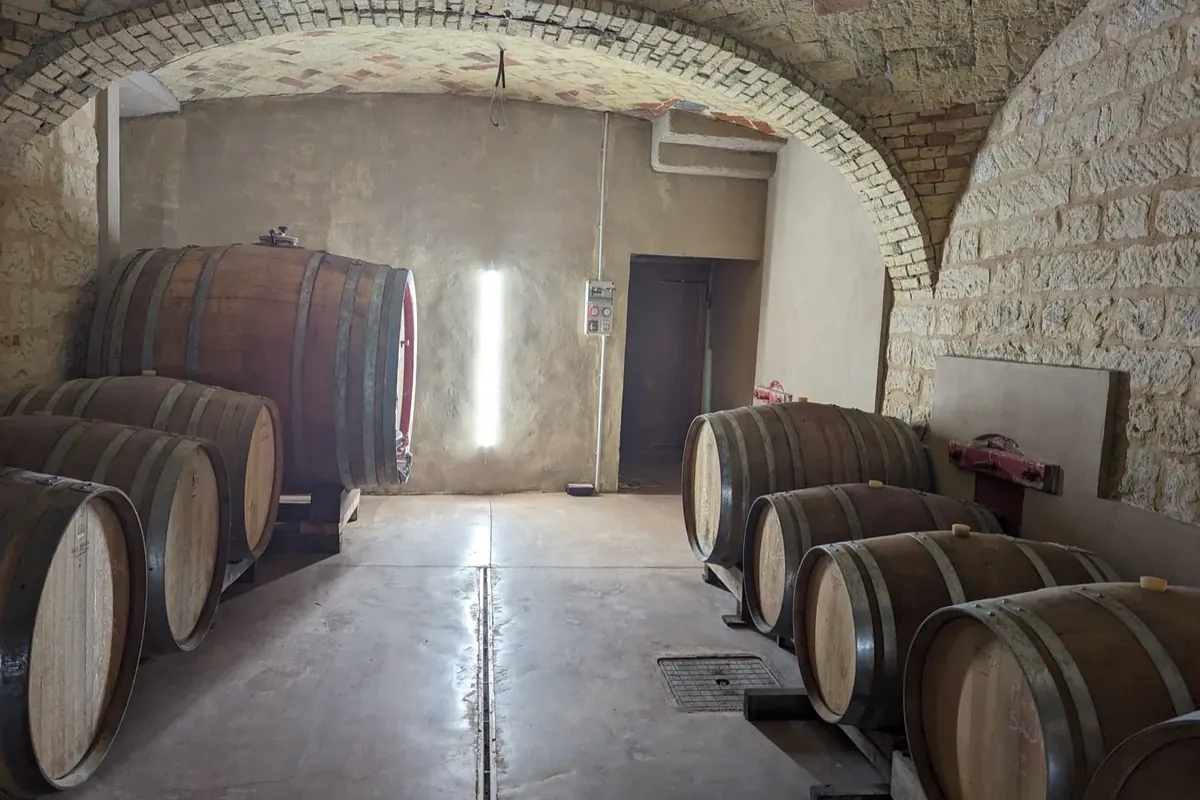
A barrique is a 225-litre oak vessel. It is not the only way to age wine in wood (there are 500-litre tonneaux, large casks of 10 or 25 hectolitres, terracotta amphorae), but the barrique has specific characteristics that make it suited to certain wines and unsuited to others. To understand why we use it only for Madonna dei Monti, you need to understand what wood does to wine.
What happens inside a barrique
When wine enters a barrique, a slow and constant exchange begins with the wood and with the outside environment. Oak is porous: it allows the passage of small quantities of oxygen from outside into the wine. This gradual micro-oxygenation has profound effects on the wine's structure.
The tannins in the wine, extracted from the skins during fermentation, polymerise, meaning they link into longer molecular chains. Polymerised tannins are perceived as softer, more integrated, less astringent. In a young wine with grippy tannins, a few months in wood can make the difference between something difficult to drink and something smooth.
The wood itself releases aromatic compounds into the wine: vanillin (giving vanilla notes), oak lactones (coconut, sweet wood), guaiacol (smoky, spicy nuances). The intensity with which these compounds transfer to the wine depends on two main factors: the age of the barrique and the level of toasting of the wood.
New oak versus used oak: the difference that matters
A new barrique is aggressive. Fresh oak releases significant quantities of wood tannins and aromatic compounds into the wine. In a tannic, concentrated wine, such as certain styles of Cabernet Sauvignon or Barolo, this can be balanced by the wine's structure. But if the wine does not have the mass to carry new oak, the result is imbalance: the wood dominates the fruit, and the wine tastes more of oak than of grape.
A second- or third-fill barrique, one already used for one or two previous wines, has already released most of its more volatile compounds. The wood is still porous, so micro-oxygenation continues to work, but the aromatic contribution is far more discreet. The wine gains structure and softness without being dominated by the wood.
For Madonna dei Monti we use second- and third-fill barriques. Barbera has naturally high acidity and relatively fine tannins: it does not need to be overpowered by new oak, but it benefits enormously from the slow evolution that used wood allows. Eighteen months is the time we have found, over several vintages, to achieve the integration we are looking for.
Eighteen months: why so long
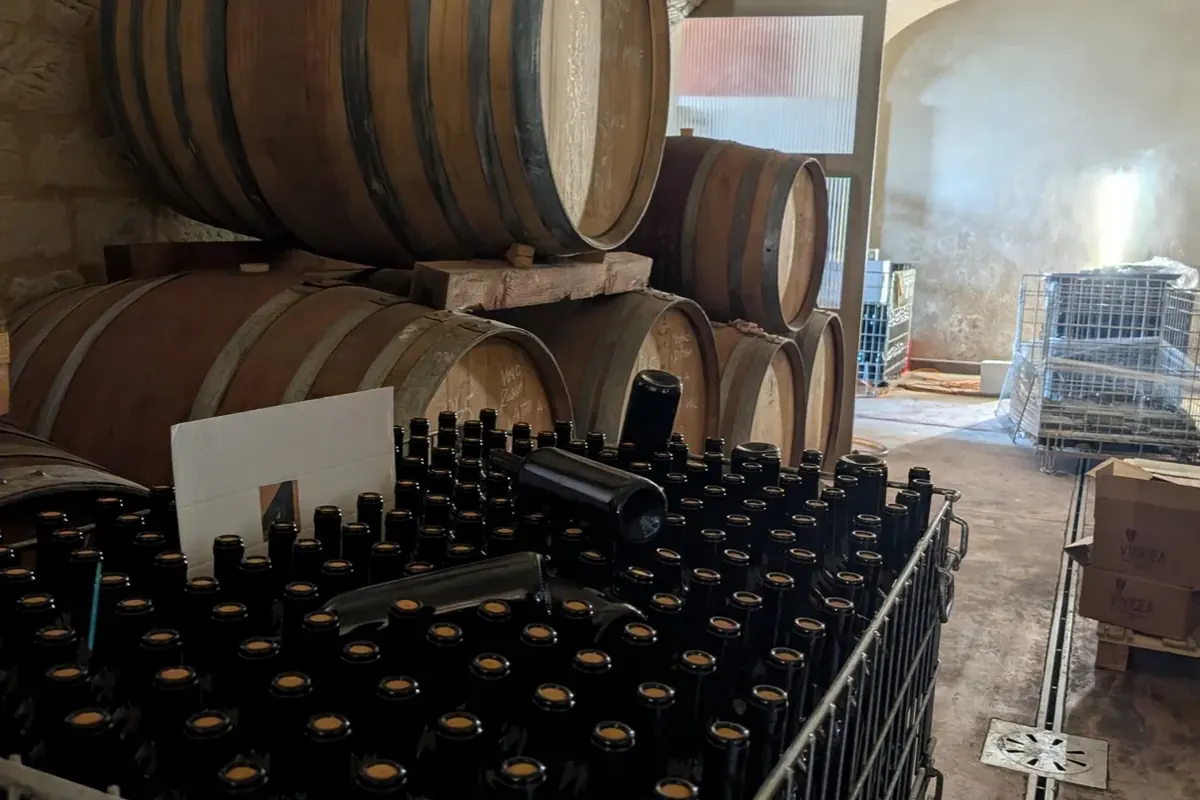
Barbera d'Asti Superiore DOCG requires a minimum ageing of fourteen months, of which at least six in wood. We go further: eighteen months in barrique, followed by bottle ageing before release.
The first six months in wood are the most dynamic: micro-oxygenation is more intense, tannins soften more quickly, aromas integrate. From the seventh month onward, the process slows down. The wine begins to build its own internal coherence: dark fruits merge with spice notes, Barbera's acidity harmonises with the tannic structure, the wood notes become part of the whole instead of standing out as a separate element.
Pulling from the barrel too early means interrupting that process halfway. Bottling a wine not yet ready means releasing something that does not represent what we were trying to make. We prefer to wait.
Why Giglio Rosa and Millecolli stay in steel
Stainless steel is a neutral vessel. It releases nothing into the wine, allows no significant oxygen exchange, and does not alter aromas. What goes into steel is what comes out, with a few months of rounding and integration, but without deep transformation.
For Giglio Rosa, our rosé, steel is the only sensible choice. It is a wine that lives by freshness, lively acidity, and aromas of fresh red fruit. Wood would extinguish precisely the characteristics that make it interesting. The same applies to Millecolli: a fresh, fruity, direct Barbera d'Asti that tells the story of the variety and territory without filters. Putting it in wood would add a layer that serves no purpose, and would remove the aromatic clarity that is its strength.
The choice between wood and steel is not hierarchical. It is not that wine aged in wood is better than wine aged in steel. They are different tools for different objectives. Madonna dei Monti is built to carry time and complexity. Giglio Rosa and Millecolli are built to be alive, direct, drinkable.
How to taste oak influence in the glass
Learning to read wood in a wine is useful for understanding the producer's choices and for judging how well the oak has integrated with the wine.
On the nose, a wine aged in new wood often shows vanilla, coconut, toast, tobacco, sweet spices (cinnamon, clove). If these notes are dominant and overwhelm the fruit, the oak is too present or too new. If they are there but integrated, if you perceive them as part of a coherent whole, the ageing has worked.
On the palate, well-integrated wood is felt in the texture: soft tannins, a certain silkiness, a structure that supports the wine without weighing it down. Poorly managed wood registers as woody tannic hardness, astringency, or a dryness that does not come from acidity but from oak tannin.
In Madonna dei Monti, after eighteen months in second- and third-fill barriques, the wood should be present but not intrusive: a spiced undertone that supports Barbera's acidity and its fruit intensity, without masking either.
Time as an ingredient
There is a common misconception about wood: that its role is to add flavour. In reality, the most important contribution of the barrique is not aromatic. It is structural. The time a wine spends in wood is the time in which it builds itself.
A wine that has not had that time is like a sentence that has not finished forming. You can hear the individual words (the fruit, the acidity, the tannins), but they have not yet come together into something coherent. The time in barrique is the time for that construction. It cannot be shortened without losing something.
That is why we wait eighteen months. Not because the regulations require it. Because Madonna dei Monti needs it.