Grape Variety · Piedmont
Barbera
Piedmont's most generous grape variety, told by those who grow it
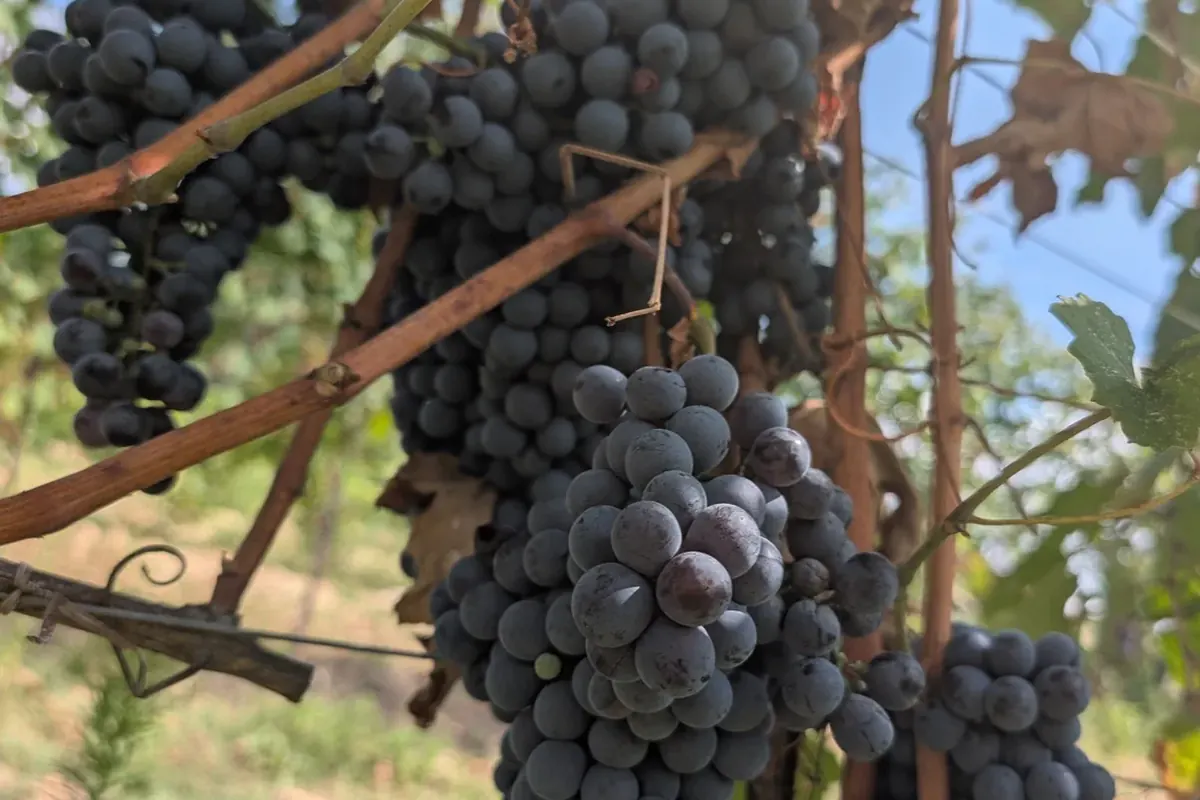
Barbera is the grape that built Piedmontese viticulture. Before Nebbiolo became the region's international symbol, Barbera was the everyday wine, the one poured at the table without ceremony, the one brought into the cellar in October and finished before spring arrived.
Almost certainly native to the Asti Monferrato area, it is now the most widely planted red-wine grape in Piedmont, with a significant presence in Lombardy as well. It is recognised by its naturally high acidity, deep colour with virtually no tannins, and pronounced fruit of cherry and blackberry. These traits make it suited to every vinification style: pure steel, large oak, barrique, or brief maceration as a rosé.
At Tenuta Magrini, in Grazzano Badoglio, Barbera is the variety we built everything on. This is not a choice made by default: it is a deliberate one. Our twenty-year-old vines at 350 metres, south-facing with a strong diurnal temperature range and cool nights, produce a taut Barbera with salty acidity and clean fruit. We interpret it three ways (rosé, steel, barrique) convinced that a single variety, listened to carefully, has everything it needs.
This page brings together everything we know about Barbera: history, appellations, differences between zones, food pairings and its unusual life as a rosé. Each section links to a dedicated article.
In depth
Frequently asked questions
- What is the Barbera grape variety?
- Barbera is a native Piedmontese grape variety, most likely originating in the Asti Monferrato area. It is the most widely planted red-wine grape in Piedmont and is defined by its naturally high acidity, pronounced fruit character and stylistic versatility: it can be vinified in steel, large oak, barrique, and even as a rosé.
- What is the difference between Barbera d'Asti and Barbera d'Alba?
- Barbera d'Asti DOCG (which includes the Superiore tier) is produced in the provinces of Asti and Alessandria, on predominantly clay and limestone soils. It tends toward a rounder profile with integrated acidity and generous body. Barbera d'Alba DOC grows in the Langhe hills, on soils partly shared with Nebbiolo, and often shows a tighter structure and more austere character.
- What does Barbera d'Asti Superiore DOCG mean?
- Barbera d'Asti Superiore DOCG is the top tier of the appellation: it requires a minimum of fourteen months ageing (at least six in wood), lower yields per hectare and a higher minimum alcohol than the base version. It represents Barbera at its most complete and age-worthy.
- What food does Barbera pair with?
- Barbera is first and foremost a wine for the table. Its natural acidity makes it ideal alongside fatty dishes: agnolotti with butter, tajarin with meat sauce, pork roast, aged cured meats, medium-aged cheeses. The rosé version pairs well with raw fish, vegetable starters and summer dishes.
- Which grapes does Tenuta Magrini grow?
- Barbera is the variety the estate was built on and remains the main one: Giglio Rosa (still rosé), Millecolli (Barbera d'Asti DOCG in steel) and Madonna dei Monti (Barbera d'Asti Superiore DOCG, 18 months in barrique) all come from it. Since the 2024 harvest we also work Nebbiolo, vinified as a rosé in Névola.