Same grape, different territory. Barbera d'Asti and Barbera d'Alba are the two principal Piedmontese denominations for Barbera, yet they regularly produce very different wines. There is no correct answer as to which is better: there are two distinct identities worth understanding before choosing.
Geography: Monferrato versus Langhe
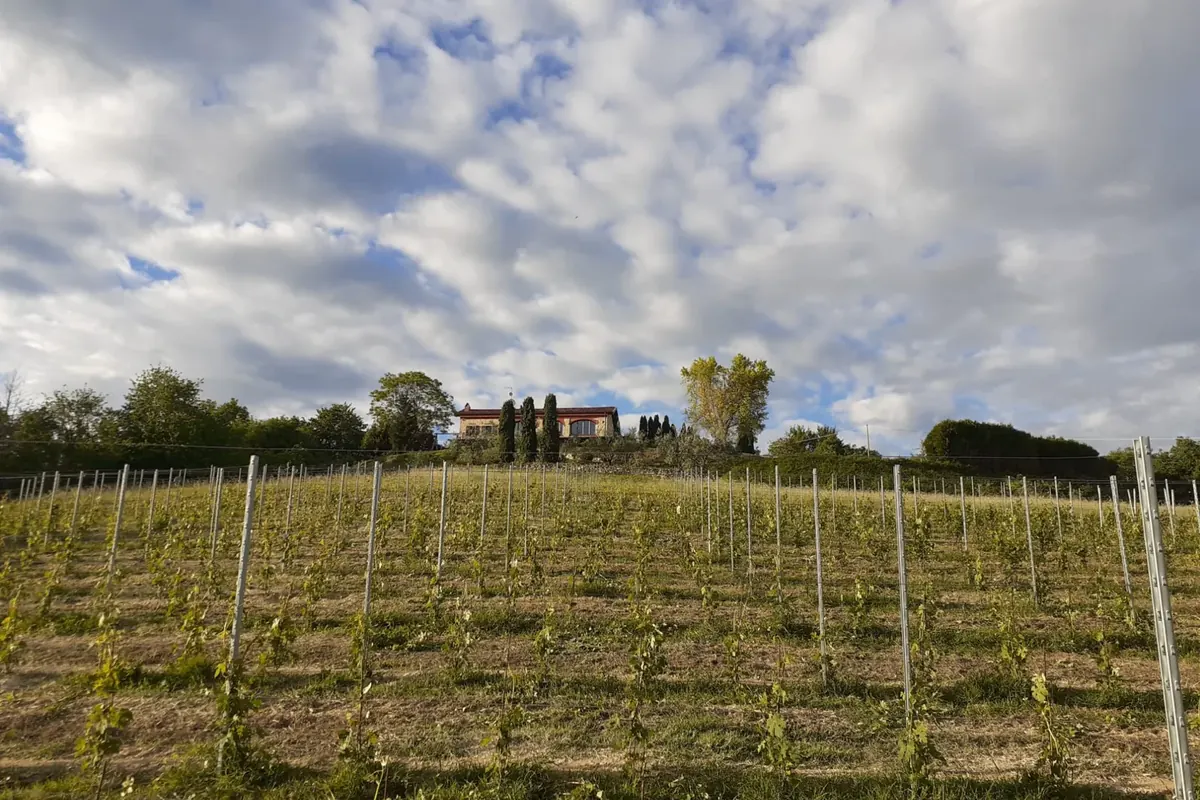
The Barbera d'Asti DOCG covers the hill country of the provinces of Asti and Alessandria, the heart of Monferrato. It is a broad territory, with altitudes ranging from 150 to 500 metres, varied exposures, and a patchwork landscape of vineyard, woodland and arable land. The climate is continental, with warm dry summers and cold winters; the autumn temperature swings are pronounced and favour aromatic ripening in the grape.
Barbera d'Alba DOC, which has not yet achieved DOCG status, is produced in the Langhe hills of the provinces of Cuneo and Asti, in zones historically known for Barolo and Barbaresco. The terrain is more dramatic, with vineyards often found at higher elevations. Alba is the oenological capital of this territory, with an established market and a strong critical tradition.
Soils: Asti's marls and tuff versus Langhe limestone and clay
Monferrato soils are predominantly clay-limestone, with a significant component of blue-grey marine marls (the "marne di Sant'Agata fossili"). These soils feed natural acidity back into the wine, encourage minerality and maintain freshness even in warm vintages. At Grazzano Badoglio, where we are located, the marl matrix is present throughout with good water retention.
In the Langhe, soil composition is more varied: compact limestone, galestro (tuff), sand and clay are often found within the same commune. Nebbiolo and Barbera vineyards in the Langhe coexist and sometimes overlap, which means that Barbera d'Alba grown on historically "Nebbiolo soils" can take on a structure and complexity unusual for the variety.
Style differences
Barbera d'Asti tends to be rounder, more fruit-forward and immediately pleasurable. The acidity is present (it is always the grape's signature), but it sits within a softer overall profile, with red and dark fruit predominating, medium body and a clean finish. Drunk young, it expresses freshness and spontaneity; aged in oak, it can develop remarkable complexity and depth.
Barbera d'Alba is often described as more serious, more structured. Cultural proximity to Nebbiolo, and the frequent adoption of Langhe winemaking practices, frequently yields more austere wines with slightly firmer tannins, a sharper acidity and greater ageing potential. This is not an absolute rule, but it is a perceptible tendency.
It is worth noting that the Barbera d'Asti DOCG specification allows both a standard version (minimum three months ageing) and a Superiore version (minimum fourteen months ageing, at least six of them in oak). This flexibility enables a very wide stylistic range within the same denomination.
Which is better? The wrong question
The honest answer is: neither. They are different expressions of the same grape in different territories, with different histories and producers who have made different choices. Barbera d'Asti has a deeper popular tradition and a character of accessibility that makes it a natural at table. Barbera d'Alba benefits from the prestige of the Langhe and the complexity that certain soils can deliver.
We are in the Asti zone, at Grazzano Badoglio, deep in Monferrato. Not as positioning: it is where we live, and where Barbera has grown on these hills for as long as anyone can remember. Millecolli is our Barbera d'Asti, unfiltered and direct. Madonna dei Monti is our Barbera d'Asti Superiore, eighteen months in barrique. Two ways of reading the same territory.