Why Barbera works at the table
It starts with the acidity: high, almost bracing, able to clear the palate between bites. Where other reds weigh down a rich dish, Barbera lifts it and readies the mouth for the next forkful.
In Piedmont, Barbera is still called "the everyday wine". That is not a way of cutting it down to size: it is the recognition of something rare. A wine that does not tire, does not dominate, and knows its place without giving up on saying anything. The bright acidity and the grape's soft tannins hold together a balance that runs from the antipasto to the cheese.
Classic Piedmont pairings
Piedmontese cooking was built alongside Barbera, and the other way round. The most emblematic first courses of the tradition (agnolotti del plin with meat dripping, tajarin with sausage ragù, baked lasagne) find in Barbera an ideal companion. The wine's acidity cuts through the richness of butter and slow-cooked meat without overwhelming the delicate flavour of fresh egg pasta.
Among main courses, bollito misto is the historic pairing: boiled cuts with their sauces (salsa verde, tomato salsa, horseradish) ask for exactly the palate-clearing that Barbera gives. Aged charcuterie, cured salamis, salame d'la duja, blood sausage, also plays well with the wine's structure.
Then there are the semi-aged cheeses, Toma piemontese or Montasio: simple, direct pairings, the kind of farmhouse table where the wine is already poured when you sit down.
International pairings
The same acidity works outside Piedmont too. With Neapolitan pizza, tomato and anchovies above all, the acidity of the tomato and that of the wine hold each other up. The same goes for pasta al pomodoro, lasagne and meat ragùs.
With slow-cooked meat dishes from Eastern Europe (goulash, spiced stews) or tacos al pastor, its medium body and lively acidity stand up to moderate spice and sweet-sour sauces. Strong blue cheeses (Roquefort, natural Gorgonzola) hold up too, the wine's freshness cutting the fat and salt.
Pairing suggestions for each Tenuta Magrini wine
Our three Barbera wines read the variety differently, and each asks for different pairings.
Giglio Rosa, our 100% Barbera rosé, made with short maceration and aged in steel, is the natural companion for Piedmontese antipasti, vitello tonnato, summer spelt salads, freshwater fish in carpione and fresh cheeses. Its freshness and light fruit profile call for light, flavourful, seasonal dishes. Serve at 10–12 °C (50–54 °F).
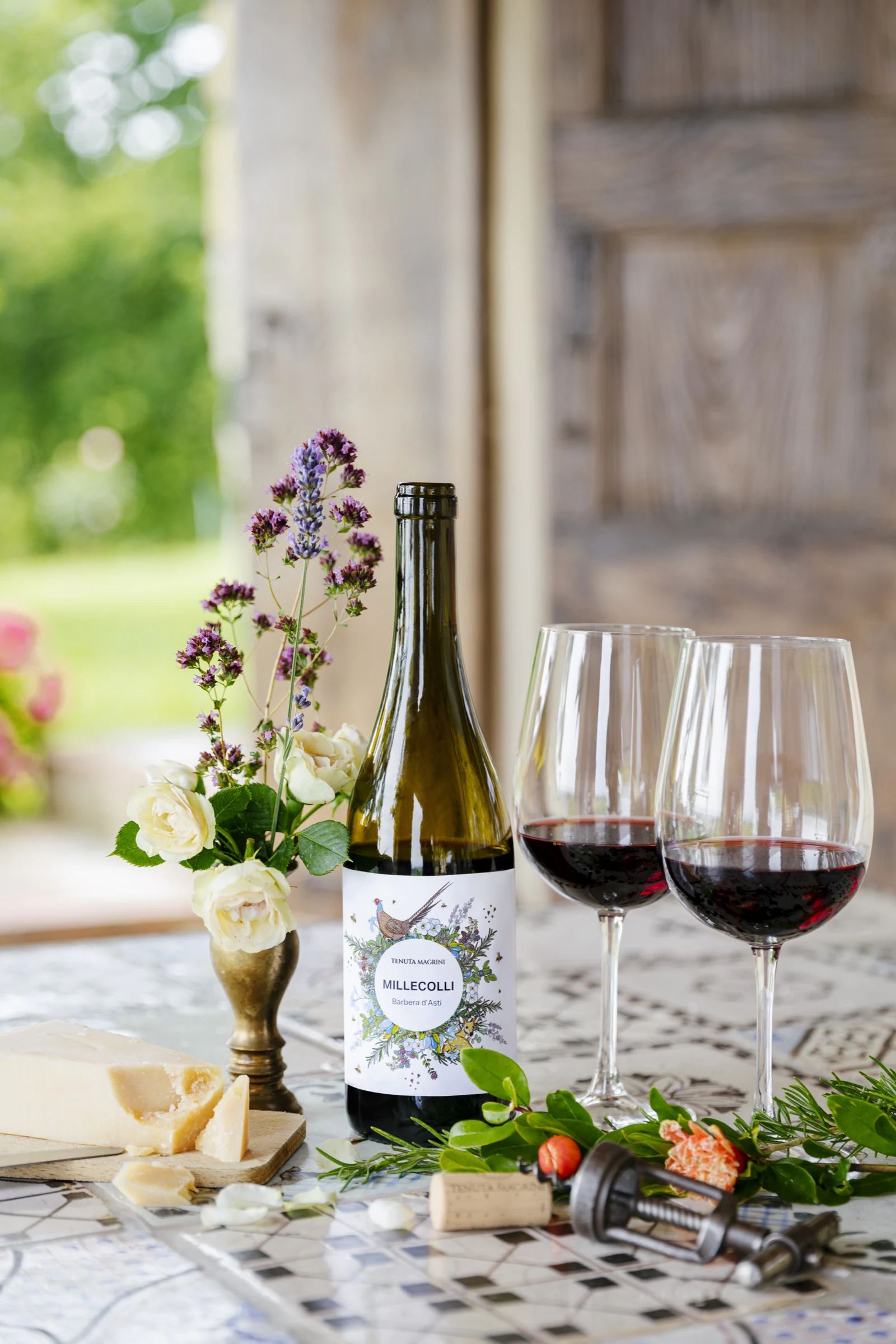
Millecolli, Barbera d'Asti DOCG, spontaneous fermentation in steel, is the house wine for the table. Piedmontese first courses, grilled red meats, aged charcuterie, semi-aged cheeses: it works with everything the Piedmontese tradition puts on the table. Serve at 16–18 °C (61–64 °F).
Madonna dei Monti, Barbera d'Asti Superiore DOCG, 18 months in barrique, deserves more substantial pairings. Brasato al Barolo, bollito misto, game, aged Castelmagno, black truffle: dishes that need a wine with structure and depth. Open one hour before serving and pour at 16–18 °C (61–64 °F).
Serving temperatures
Serving temperature is the detail most often overlooked, and it matters a good deal. Barbera rosé (Giglio Rosa) expresses itself best around 10–12 °C: colder, the aromas close up; warmer, it loses the freshness that defines it. Red Barbera (Millecolli, Madonna dei Monti) is best served at 16–18 °C, a few degrees cooler than Barolo or Brunello, to highlight its acidity without weighing down the drinking experience.
A simple tip: put the bottle in the refrigerator for twenty minutes before bringing it to the table. Not to chill it aggressively, but to temper those extra degrees that during summer months make any red wine feel flat.
Want to discover our wines and order directly? Write to us or buy on Callmewine.