We have already shared the news: we are among the new entries of the Slow Wine 2027 guide. Here we want to tell something else: what kind of winery a guide like Slow Wine looks for, and why, for an organic winery like ours, those values are not an exam to pass but the normal way of working.
Good, clean and fair: the values behind the guide
Slow Wine comes from the Slow Food world and carries its core idea: a wine should be good, clean and fair. In plain words:
- Good: a wine you drink with pleasure, which tastes of something precise, not of a recipe that could be repeated anywhere.
- Clean: a wine made with respect for the soil, the water and the people, with as little intervention as possible in the vineyard and the cellar.
- Fair: a wine born from work that respects those who make it and the place where it is made.
That is why the guide does not stop at the glass. It looks at the bond with the territory, the practices in the vineyard, the choices in the cellar, and whether what a winery says matches what it does. The wine stays at the centre, together with the story of how it gets there.
The bond with the territory: a vineyard in the wood, in Monferrato
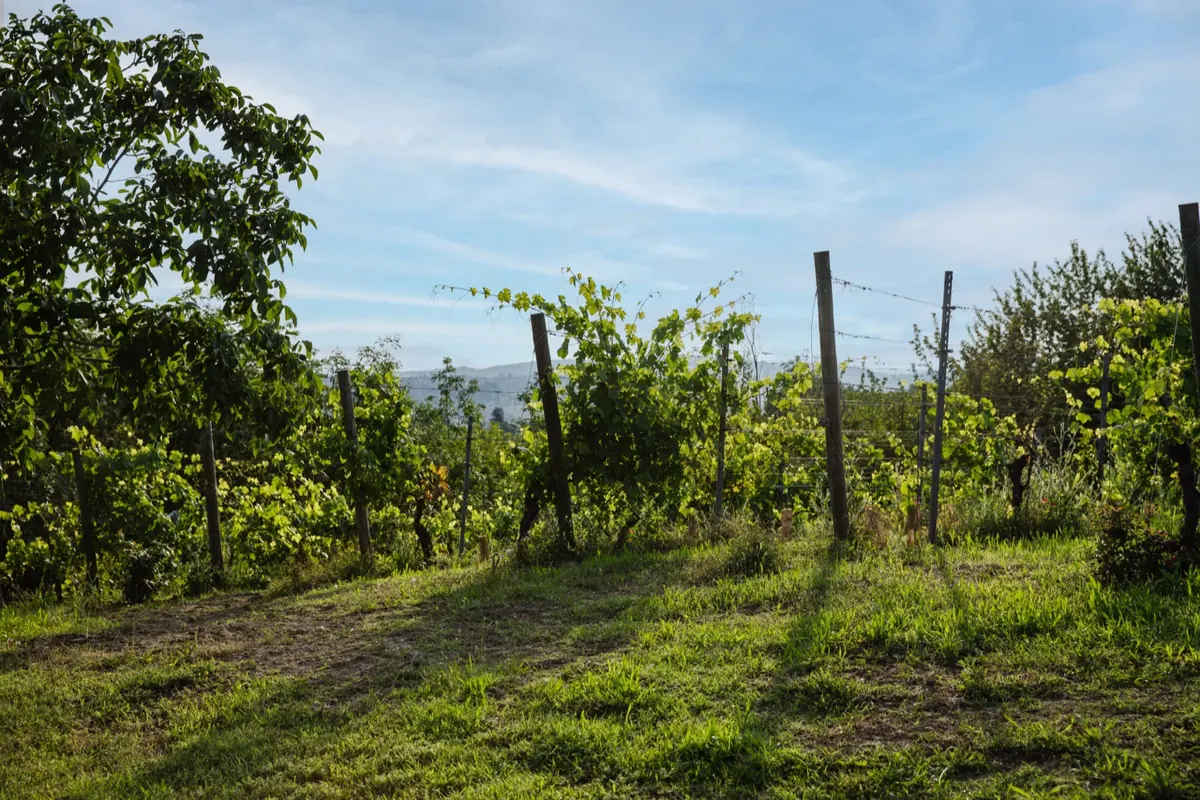
Our vineyard is in Grazzano Badoglio, in the heart of Monferrato: 350 metres and a vineyard in the wood. The wood around the rows is not a detail of the landscape, it is part of the vineyard's balance: we write about it in Vineyard biodiversity. A wine tied to its territory is, for us, first of all a wine that lets this hill speak.
Clean in the vineyard: our organic path
No herbicides since 2021. Organic conversion with ICEA began in 2023; our wines are now ICEA certified. Organic is not a label we add: it is the choice to give up synthetic chemicals and to accept that every vintage asks for more attention and more hours among the rows. What it means in practice is explained in Organic farming in the vineyard and in the story of our ICEA certification.
Clean in the cellar: hand harvesting and the grape's own yeasts
The harvest is always by hand: bunches are picked one by one, and only the grapes that deserve it reach the cellar (why we harvest by hand). Fermentations are spontaneous, with the native yeasts the grapes bring from the vineyard: the most direct way to bring the territory into the glass (native yeasts and why they matter).
Fair: choices made to last
None of these choices was made with a guide in mind. They are the way we decided to work, and the Slow Wine 2027 listing confirms that, seen from outside, they hold up. For a young organic winery it is the most useful recognition: not an award for a single wine, but for a path.
Taste the path: our organic wines
The best way to understand all this is to open a bottle. Our labels come from ICEA certified organic grapes, picked by hand and fermented with native yeasts.
- Millecolli — 100% Barbera d'Asti DOCG from twenty-year-old vines, spontaneous fermentation in steel.
- Madonna dei Monti — Barbera d'Asti Superiore DOCG, 18 months in barrique.
- Giglio Rosa — still rosé, 100% Barbera.
- Névola — rosé from Nebbiolo grapes, no fining and no filtration.
Importers and wine shops: write to us from the contact page for a trade enquiry.