Barbera and pink: an unexpected meeting
Barbera is a thick-skinned grape, rich in anthocyanin pigments. Vinified as a red, it produces wines of deep ruby, almost violet in their youth. The idea of making a rosé from it can seem counterintuitive — yet it is precisely that density of raw material that makes a characterful rosé possible: not pale and timid, but flavourful, dry, with personality.
The rosé tradition in Piedmont has never been as strong as in Provence or Tuscany. Yet Barbera — with its naturally high acidity and soft tannins — lends itself well to rosé winemaking: you get body without astringency, colour without weight, freshness without excessive lightness.
The technique: short cold maceration
Rosé wine is not made by blending white and red wine — in Italy this is prohibited for still wines. It is made instead by controlling the contact time between the juice and the skins of red grapes after crushing. The longer this contact, the more colour and structure pass into the wine.
For Barbera rosé, the most widely used technique — and the one we use for Giglio Rosa — is short cold maceration: the hand-harvested grapes are crushed gently, and the skins remain in contact with the juice for only a few hours, at a controlled low temperature. This allows the extraction of colour (anthocyanin pigments) and a share of the varietal aromatics, without giving the tannins time to release astringency into the wine.
The low temperature during maceration slows enzymatic activity and preserves the primary fruit aromas. After the skins are separated, the juice undergoes spontaneous fermentation with indigenous yeasts present in the cellar — no selected yeasts added, no correction. Stainless steel preserves freshness and aromatic integrity until bottling.
The profile of a Barbera rosé
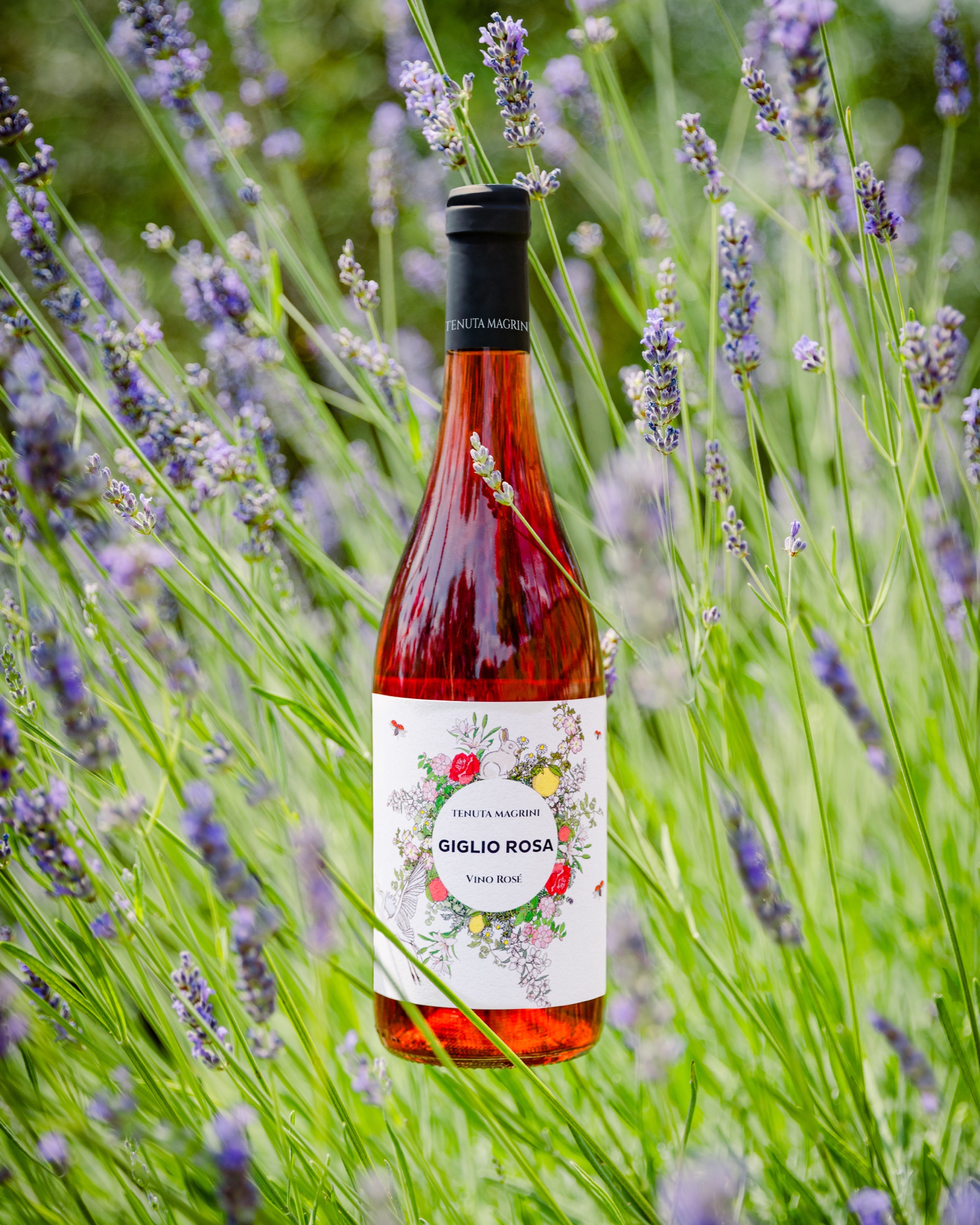
The result is a serious rosé. The colour is antique rose or cherry pink, with luminous reflections — nothing dusty pink, nothing violet. On the nose it opens with wild strawberry, pomegranate, rose hip, and a subtle herbal and mineral vein that recalls the terroir. On the palate, acidity is the protagonist — lively, salivating, persistent — but never harsh. The finish is dry, almost austere.
This profile sets it sharply apart from Provençal rosés, which tend to be softer and more aromatic, and from the rosatos of central and southern Italy, often more fruity and full-bodied. Barbera rosé is Piedmontese in character: direct, dry, uncompromising.
Giglio Rosa by Tenuta Magrini
Giglio Rosa is the first wine born in our cellar, vintage 2022. One hundred per cent Barbera from twenty-year-old vines in Grazzano Badoglio, 350 metres above sea level. Hand-harvested in crates, gently pressed, spontaneous fermentation with indigenous yeasts in stainless steel. Organic certification ICEA. Nomacorc Green closure, 100% recyclable.
It is a wine designed for the table, not the aperitivo hour. The acid structure and the faint salinity on the finish make it food-hungry — almost impatient to find something to eat alongside it.
When and how to drink it
Giglio Rosa is a wine to drink young, within two to three years of the vintage. It is not built for ageing: its strength is freshness, and freshness is best enjoyed before it fades. Serve at 10–12 °C (50–54 °F) in a medium tulip glass, which gathers the aromas without shutting them in.
Food pairings range from Piedmontese antipasti (vitello tonnato, anchovies in green sauce, Russian salad) to lighter summer dishes: spelt salad with grilled vegetables, freshwater fish tartare, vegetable carpaccio with fresh goat's cheese. Light first courses also work well — herb risotto, cold pasta with tomato and basil — as do fresh cow's milk or goat's milk cheeses.
It is the wine we open in the cellar when guests arrive: it puts everyone at ease without making a scene, and it disappears from the bottle sooner than anyone expects.
Explore all the details of Giglio Rosa on the wine page or buy it on Callmewine. For direct orders, write to us.